


If you’re searching for how to straighten a synthetic wig, you likely want a clean, smooth finish-without frizz, kinks, or the nightmare scenario of melted fibers. In this post I will give you the correct techniques to use (steam, hot water and low heat on heat-friendly) that you can perform before, during and after straightening your wig so that you will maintain your wig longer than otherwise expected.
Quick answer: Can you straighten a synthetic wig?
Yes, you can straighten a synthetic wig, but you must choose the method based on the fiber type. Standard synthetic fibers usually cannot handle direct heat from flat irons, and they can melt or become permanently frizzy if overheated.
Heat-friendly (sometimes called heat-resistant) synthetic wigs can tolerate controlled heat, but they still require low temperatures, fewer passes, and careful sectioning. If you’re unsure what fiber you have, treat it like regular synthetic and start with steam or the hot water method.
Identify your wig fiber before you start
Signs it may be heat-friendly vs not
The safest place to confirm is the product label, packaging, or the product page where the wig was purchased. If it says “heat-friendly” and lists a maximum temperature, you have more options than steam.
If you cannot confirm, do not assume. Many classic synthetics look similar to heat-friendly fibers, but they react very differently under heat, and a single wrong pass can change texture forever.
Do a strand test (fast and smart)
Choose a small, hidden section near the nape and test your method there first. This takes two minutes and can save the entire wig.
If you’re steaming, keep the steamer at a safe distance and see whether the fiber relaxes smoothly. If you’re using heat tools on a heat-friendly wig, start at the lowest temperature and watch for changes like roughness, shrinking, or a “crispy” feel-those are stop signs.

Tools and setup for a smooth result
Basics for any method
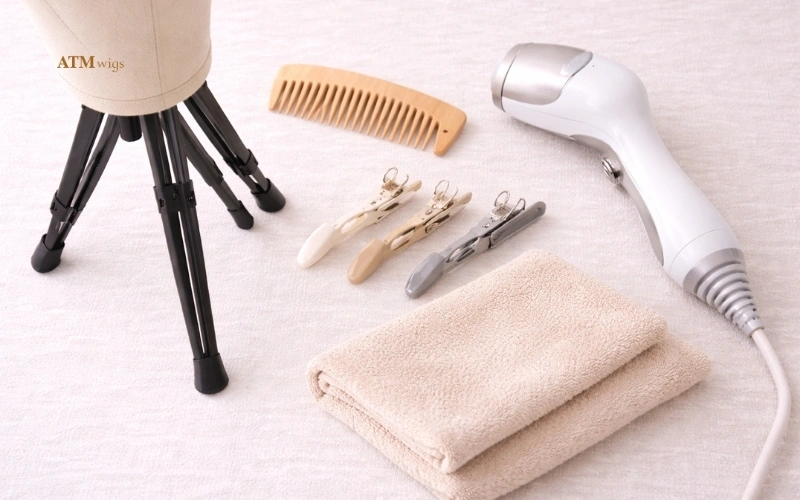
Use a wig stand or block head so the wig stays stable and you can work with consistent tension. Grab clips for sectioning, a wide-tooth comb, and a spray bottle with clean water to control static.
A microfiber towel helps reduce snagging, and it’s useful for supporting the hair while you work on ends. Good lighting matters too, because early heat damage can look subtle at first.
Tools by method
For steam straightening, a garment steamer or wig steamer works well, along with a heat-safe comb. For the hot water method, you’ll need a heat-safe bowl or basin; a thermometer is helpful but not required.
For heat-friendly synthetics, use a flat iron or hot comb with adjustable temperature settings. Avoid tools that only have “high/low” because you can’t control risk precisely.
Prep the wig properly (this prevents frizz)
Detangle the right way
Detangle before you straighten, not after. Start at the ends, work upward, and hold the hair above any knots so you’re not pulling tension into the cap.
Rushing through tangles creates friction, and friction is what turns synthetic ends fuzzy and stubborn. A clean detangling routine makes every straightening method look smoother.
Wash and dry considerations (when it matters)
If your wig has heavy product buildup, straighten after a gentle wash. Buildup can make fibers tacky, dull, and prone to snagging, which can create frizz during styling.
For heat tools, make sure the wig is fully dry. For steam or hot water methods, a light mist is fine, but the cap and lace should not be soaked.
Protect lace and cap construction
Keep direct steam and heat away from lace, knots, and the cap whenever possible. Focus on mid-lengths and ends first, then carefully smooth closer to the top only if needed.
Secure the wig firmly on the stand so you’re not tugging the base while combing. A stable setup reduces shedding and prevents the cap from stretching.

Method 1 (best overall): steam straightening for regular synthetic wigs
Steam is the safest overall method of straightening synthetic wigs because it relaxes the fibre of the wig rather than crushing it in hot plates. It’s also excellent for removing shipping bends and softening unwanted waves.
When to use this method
Use steam if your wig is not labeled heat-friendly, or if you’re unsure about the fiber type. It’s also the best choice when you want a natural, wearable straight look rather than an ultra-sleek finish.
Steam works especially well for wigs that have become puffy, slightly frizzy, or kinked from storage. It can refresh shape without aggressively “flattening” the hair.
Step-by-step technique
Place the wig on a stand and part it the way you usually wear it. Section the hair into small panels and clip the rest out of the way so you can work neatly.
Let your steamer heat fully, then hold it a few inches away from the hair. Starting at the ends, gently comb downward while letting the steam pass along the section.
Use steady, light tension, and aim for fewer passes with a smooth motion rather than repeated aggressive strokes. Once the section looks relaxed, let it cool in a straight position before moving it around.
Tips for a more natural finish
Don’t chase “pin-straight” like human hair; synthetic can look stiff if overworked. Instead, aim for smoothness, reduced frizz, and controlled movement.
If the ends look too blunt, you can create a slight natural bend with steam so the finish looks softer. Minimal product is key, because heavy coatings can attract dust and increase tangling.

Method 2: hot water dip method (best for ends and stubborn kinks)
The hot water method is a reliable fix for flipped ends, sharp bends, and creases from packaging. It’s simple, but temperature control is what makes it safe.
When to use this method
Use this method when the issue is concentrated at the ends-like a “hook” shape, harsh kinks, or uneven bends. It’s also helpful when you don’t have a steamer but still want a low-risk approach.
This is often the quickest way to reset the ends of a straight synthetic wig that has started to kick outward. It can bring back a smoother, straighter line.
Step-by-step technique
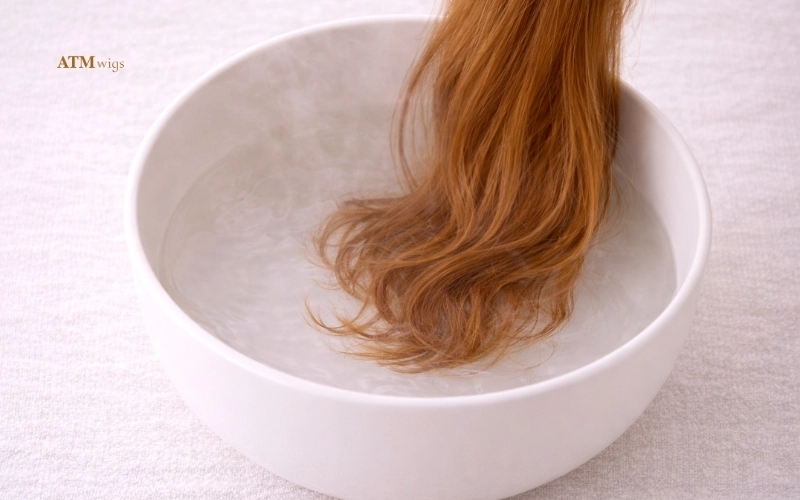
Heat water until it’s hot but not boiling. You want enough warmth to relax the fiber, without pushing it into a risky temperature zone.
Hold the wig so only the ends (or the kinked area) go into the water. Dip briefly, remove it, and then comb downward with gentle, consistent tension.
Lay the hair straight on a towel or let it hang straight on a stand to dry. Avoid dunking the cap, lace, or knot area, because that can affect the wig structure and adhesive areas on lace fronts.
Where people go wrong
The biggest mistake is water that’s too hot. Another common error is twisting or scrunching the hair while it’s warm, which sets new bends.
Also, don’t pack the wig away before it’s fully cool and dry. Warm fiber can “memorize” folds and create fresh creases during storage.
Method 3: blow-dryer and tension method (only if your wig allows it)
A blow-dryer can smooth certain fibers, but it isn’t the best option for unknown synthetics. If you use it, keep heat low, keep distance, and keep airflow moving.
Who this is for
This method is best for heat-friendly synthetics or wigs where the brand specifically allows low-heat smoothing. It can also help with mild smoothing when you’re careful and avoid concentrated heat.
If you notice immediate texture changes-tightening, roughness, or shrinking-stop. That’s a sign your fiber does not like this method.
Step-by-step technique
Set your dryer to low heat with moderate airflow. Work in small sections using a paddle brush or wide-tooth comb to guide the hair straight.
Aim the airflow downward along the fiber direction while brushing from mid-length to ends. Finish with a cool shot if available, because cooling helps the fiber hold its shape.

Method 4: flat iron or hot comb (heat-friendly synthetic only)
If your wig is labeled heat-friendly, controlled heat tools can produce the sleekest finish. Even then, the rule is simple: lowest temperature that works, thin sections, and minimal passes.
Safety rules that matter
Avoid clamping hard with a flat iron. Pressure plus heat can create shiny “pressed” patches that look unnatural on synthetic fibers.
Never hold the tool in one spot. Keep movement steady, and don’t repeatedly pass over the same section chasing perfection.
Keep tools away from lace, knots, and the cap. Focus on the hair fiber, especially mid-lengths and ends, where most frizz and bends happen.
Step-by-step technique
Detangle first, and ensure the wig is fully dry. Section the wig into thin panels so you can straighten in one smooth pass.
Start at the nape and work upward to avoid re-tangling finished sections. Make one slow, controlled pass, then let the section cool completely before deciding if it needs a second pass.
If it still isn’t straight after two passes, don’t keep going. Switch to steam to refine the finish rather than increasing heat or repetition.
How to keep it from looking “plastic straight”
Synthetic can look overly uniform if it’s pressed too flat. Leaving a tiny bit of movement at the ends can make the style more natural.
A light, wig-safe smoothing product can reduce static and improve realism, but use the smallest amount possible. Too much product can cause buildup and lead to faster tangling.

Special situations: curly synthetics, frizz, and shape issues
Straightening a curly synthetic wig: what’s realistic
Many curly synthetic wigs have strong fiber memory. Once you straighten them, they may not return to the original curl pattern, especially if you use heat tools.
If you love the curls but want less puff and frizz, consider steam-smoothing and reshaping rather than fully straightening. This often improves wearability without permanently changing the style.
Loose waves usually respond better than tight curls, and heat-friendly curly synthetic gives you more flexibility. Still, results will never behave exactly like human hair.
Fixing frizzy ends after straightening
Frizz often comes from friction, over-brushing, or overheating. Start by smoothing with steam and let the ends cool straight before handling.
If the ends feel permanently rough, a small trim can dramatically improve the finish and reduce tangling. Synthetic ends don’t “heal,” so trimming can be the cleanest fix.
Fixing crown bumps and “helmet hair”
This usually happens after storage pressure at the top. Put the wig on a stand, part it correctly, and use light steam to reshape the crown.
Let it cool fully in the correct shape. Cooling is what sets synthetic fiber, so don’t rush this step if you want the crown to lay naturally.
Managing tangling at the nape
Nape tangles happen from friction with collars, scarves, and car seats. Detangle the nape often, and avoid heavy products that create sticky buildup.
When storing, keep hair aligned so the nape area isn’t rubbing against itself. Small habits here make a big difference in how long a straight style lasts.
Aftercare: keep your synthetic wig straight longer
Cooling and setting is part of styling, not an extra. After steaming or using heat tools, let the hair rest straight on a stand before brushing or packing it away.
For storage, a stand is ideal because it prevents creases. If you travel with a box, lay the hair straight and avoid tight folds that can set new bends.
Maintain straight styles by detangling regularly and refreshing with the least intense method that works-often steam. Less heat and less friction equals a longer-lasting finish.

When not to DIY (and when to replace)
If the fiber looks crinkled, feels crunchy, or has obvious melted patches, further heat usually makes it worse. At that point, focus on minimizing tangles and consider professional reshaping or replacement.
If the wig tangles instantly even after careful detangling, the fiber may be too worn from friction and buildup. Repeated heavy straightening can shorten lifespan, especially on standard synthetic.
If you want frequent straight styling and the most natural movement, you may be happier long-term with a human hair option that tolerates styling more reliably.
FAQ: how to straighten a synthetic wig
Can you straighten a synthetic wig with a flat iron?
Only if it is heat-friendly and the brand allows it. Regular synthetic wigs can melt or become permanently frizzy under a flat iron.
How do I know if my synthetic wig is heat-friendly?
Check the label, packaging, or product page for heat guidance and a maximum temperature. If you’ve exhausted those options and still cannot verify whether a synthetic wig is heat-resistant, then you can also use steam and hot water.
What temperature should I use on a heat-friendly synthetic wig?
Use the lowest effective temperature and always do a strand test first. Lower heat and fewer passes protect the fiber and prevent shine.
Can I use boiling water to straighten a synthetic wig?
Not recommended. Water that’s too hot can warp fibers and increase the risk of damaging the cap or lace if it spreads.
What’s the safest way to straighten a regular synthetic wig?
Steam straightening is usually the safest and most controllable method for standard synthetic fibers.
How do I fix frizzy synthetic wig ends after straightening?
Try gentle steam smoothing and minimize brushing. If the ends are permanently rough, a small trim often helps the most.
Will the wig stay straight after washing?
It depends on the fiber. Some synthetic wigs will revert back a little bit to it’s style after being washed, but those wigs that are heat-friendly will hold their straightness longer as long as they are correctly taken care of after washing.
Can I straighten a synthetic lace front wig without ruining the lace?
Yes, but keep direct heat and steam away from lace and knots. Work mainly on mid-lengths and ends with careful sectioning.
Why does my synthetic wig get puffy after I straighten it?
Static and over-brushing can lift the fiber. Steam with gentle downward tension usually helps it lay flatter and smoother.
How do I keep a synthetic wig straight during travel?
To keep your wig from getting messed up, try to store it as flat as possible (with the hair all lined up) and when you arrive at your destination, allow it to keep its shape for a short period of time before wearing it.
Now you know how to straighten a synthetic wig using the safest method for your fiber type-steam for most wigs, and controlled low heat only for heat-friendly pieces. If you want a straighter look with more styling freedom and a natural finish, explore ATM Wigs’ services or catalog to find premium options that match your wear goals.

