


Can synthetic wigs get lice? Not in the same way a human scalp can, but they can temporarily carry lice after recent contact. This article explains whether lice can live on synthetic wigs, when to wash or sanitize them, and what to do after suspected exposure.
The short answer: can synthetic wigs get lice?
The short answer is: synthetic wigs can temporarily carry lice, but they are not an ideal place for lice to live for long.
Head lice need a human host to survive. They rely on the warmth of the scalp and regular access to blood. A synthetic wig does not provide that environment.
That said, a wig can still become contaminated if it has been worn by someone with lice or if it comes into direct contact with infested items. So while lice do not truly “live” on a synthetic wig the way they do on a scalp, they may still be present for a short time.
Synthetic wigs are not a natural home for lice
Lice are adapted to live very close to the scalp. They stay near the skin because that is where they feed and where conditions support survival.
Synthetic fibers do not replace the role of the scalp. That is why a synthetic wig is not a long-term habitat for lice.
A synthetic wig can still carry lice temporarily
Even though lice do not thrive on synthetic wigs, they can still be transferred onto one. This usually happens through direct use, recent wear, or contact with personal items such as wig caps or brushes.
In other words, the main concern is not that lice will move into the wig and stay there. The concern is that the wig may briefly carry them after exposure.
Carrying lice is not the same as being infested
This is an important difference. A scalp can become infested because lice can survive and continue feeding there.
A synthetic wig does not allow that same cycle to continue. It may hold lice temporarily, but it does not support them in the same way a human head does.
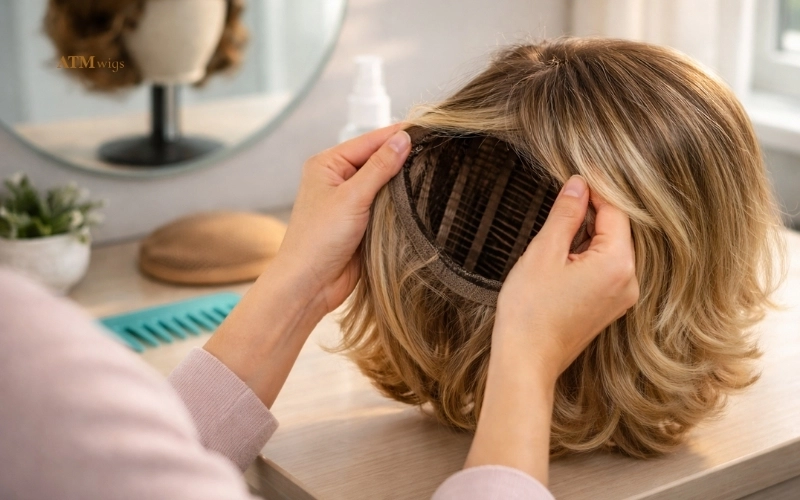
How do lice spread in the first place?
To understand the risk with wigs, it helps to know how lice spread. Many people assume lice jump from surface to surface, but that is not how they usually move.
Lice spread mainly through direct contact
The most common route is head-to-head contact. This is how lice move most easily from one person to another.
That is why close personal contact remains the biggest source of transmission, not wigs sitting alone on a stand.
Shared items can sometimes transfer lice
Although less common than direct contact, shared personal items can still play a role. Items that touch the head may carry lice briefly if they were recently used by someone with an active infestation.
This includes wigs, wig caps, combs, brushes, hats, scarves, and pillowcases.
Timing matters
The risk is highest when the contact is recent. A synthetic wig that was worn very recently by someone with lice is a different situation from a wig that has been sitting unused for days.
This is why recent exposure matters more than the wig material itself.

Can lice live on a synthetic wig for long?
In most cases, no. Lice do not usually survive long off the scalp.
Lice need the scalp to survive
Head lice are not designed to live independently on synthetic fibers. Without a human host, their ability to survive drops quickly.
That is why a synthetic wig does not usually remain a lice risk for long unless the exposure happened very recently.
Temporary contamination is more realistic than long-term survival
If someone with lice wears a synthetic wig, the wig may carry live lice for a short period. But that is different from the wig becoming a place where lice continue living normally.
This is the key point readers need to understand: temporary contamination is possible, but long-term survival is limited.
Recent wear increases concern
A wig should be treated more carefully if:
- it was just worn by someone with lice
- it was stored immediately after wear
- it was used together with a wig cap, scarf, or brush that touched the scalp
These are the situations where washing and hygiene steps make the most sense.

Can you get lice from wearing a synthetic wig?
It is possible, but the risk depends on context.
The risk is tied to recent exposure
If a synthetic wig was recently worn by someone with lice and another person wears it soon after, there may be a chance of transfer.
The issue is not the synthetic fiber itself. The issue is whether the wig had fresh contact with lice shortly before reuse.
Shared wigs are more concerning than personal wigs
A personal wig worn only by one person is usually a very low-risk situation.
Shared wigs are more concerning because they create an opportunity for recent transfer. This is especially relevant with costume wigs, rentals, secondhand wigs, and theater or salon trial use.
New wigs are different from used wigs
A brand-new wig from a reputable seller is very different from a used or shared wig. When people ask, “Can wigs get lice?” they are usually worried about reused items, not new inventory.
That is why the biggest hygiene concern is almost always around shared or previously worn wigs.

When should you wash or sanitize a synthetic wig?
You do not need to wash a synthetic wig just because you are worried in general. But you should clean it when there is a clear reason to do so.
Wash the wig after suspected exposure
If the wig was worn by someone who may have lice, or if it touched personal items from someone with lice, it should be cleaned before being worn again.
This is the simplest and most practical response.
Wash it if the wig was shared
If multiple people have tried on or worn the same wig, washing it is a smart hygiene step. This matters even more if the sharing happened recently and without clean caps or protective barriers.
Clean related items too
Do not focus only on the wig itself. If exposure is suspected, the wig cap, brush, comb, scarf, and storage items should also be cleaned.
This prevents the same contact chain from continuing after the wig is washed.

Should you share wigs, brushes, or wig caps?
In general, no. These items are best treated as personal-use items.
Sharing wigs is not recommended
A wig sits close to the scalp and often comes into contact with the hairline, neck, and inner cap area. Even if lice do not live on the wig long-term, sharing still creates unnecessary risk.
That is why personal wigs should stay personal whenever possible.
Brushes and combs should not be shared
Brushes and combs move through fibers and may touch the inside cap area or natural hair underneath. If they are shared after lice exposure, they can contribute to transfer.
Keeping separate tools is a basic but important hygiene habit.
Wig caps should be treated as personal items
Wig caps sit directly against the scalp, making them even more sensitive than the wig itself in some situations.
If a wig cap has been worn during possible lice exposure, it should be washed before reuse and should not be shared.
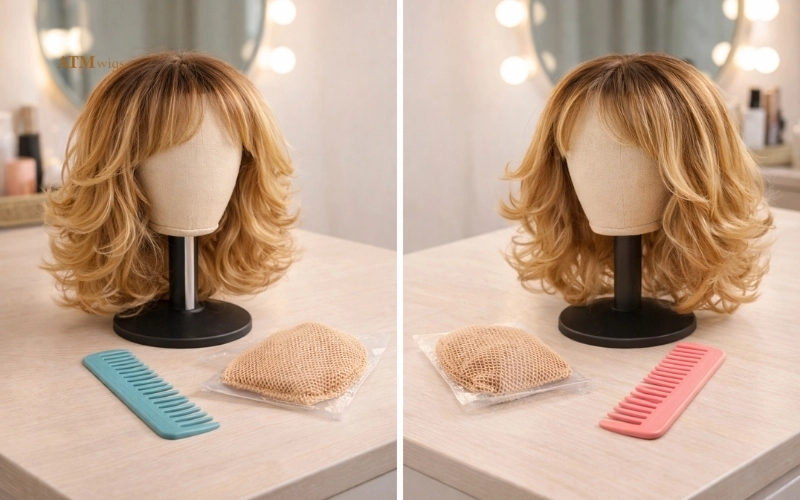
What should you do after suspected lice exposure?
If you think your synthetic wig came into contact with lice, there is no need to panic. You just need a clear cleaning process.
Step 1: Stop wearing the wig until it is cleaned
Do not keep wearing the wig while you are unsure about exposure. Set it aside and keep it separate from clean wigs or accessories.
This helps avoid repeated contact.
Step 2: Wash the synthetic wig gently
Use cool or lukewarm water and a shampoo made for synthetic wigs. Swish the wig gently in the water and avoid rough scrubbing.
Rinse thoroughly and handle the fibers with care.
Step 3: Let the wig air dry completely
Place the wig on a stand and allow it to dry fully before wearing or storing it again.
Do not use high heat unless the wig is specifically labeled as heat-friendly and the care instructions allow it.
Step 4: Clean all related items
Wash the wig cap, clean your combs and brushes, and refresh any cloth items that were used with the wig.
A full hygiene reset is better than cleaning only one item and forgetting the rest.
Step 5: Keep shared or exposed wigs separate
If you own several wigs, keep the exposed one separate until it has been washed and dried.
This simple step helps avoid spreading contamination to other items.

How to clean a synthetic wig after possible lice exposure
Cleaning a synthetic wig after exposure should be effective but still gentle on the fiber.
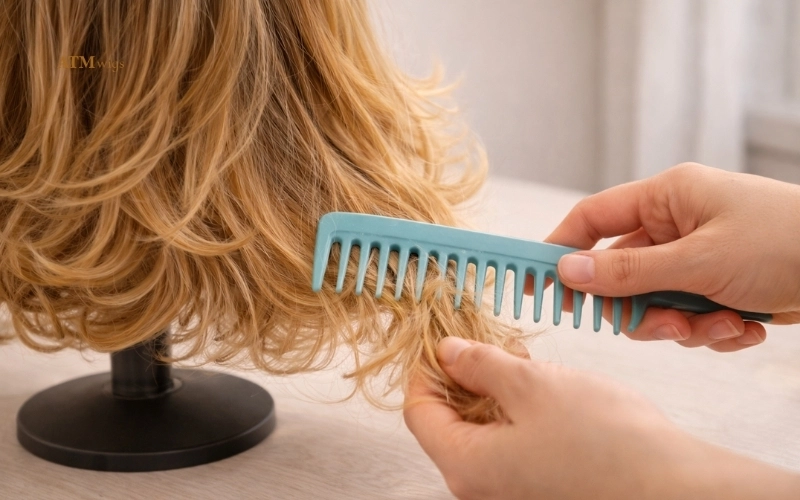
Detangle before washing
Start by gently detangling from the ends upward. This reduces friction during washing and helps protect the shape of the wig.
Use a wide-tooth comb or your fingers if needed.
Use synthetic-safe products
Choose a shampoo designed for synthetic wigs whenever possible. This helps clean the wig without damaging the fibers.
Avoid overly harsh household cleaners or strong chemicals.
Rinse well and dry naturally
After washing, rinse the wig carefully so no product residue is left behind.
Then place it on a wig stand and let it air dry completely before brushing or styling.
Do not overuse heat
Heat is not a universal solution. Many synthetic wigs can be damaged by excessive heat, so focus on washing and separation rather than trying to “heat sanitize” the wig.
FAQs about synthetic wigs and lice
Can lice live on synthetic wigs?
Lice may stay on a synthetic wig temporarily after recent exposure, but synthetic wigs are not a suitable long-term environment for them.
Can synthetic wigs carry lice?
Yes, a synthetic wig can carry lice for a short time if it was recently worn by someone with lice or touched contaminated items.
Can you get lice from a synthetic wig?
It is possible, especially if the wig was shared soon after exposure. The risk is tied more to recent contamination than to the wig material.
Should I wash a synthetic wig after lice exposure?
Yes. If you suspect exposure, wash the wig before wearing it again and clean related items like wig caps and brushes.
Can lice live in a wig cap?
A wig cap can be involved in exposure because it sits directly against the scalp. It should be washed if lice exposure is suspected.
Should you share wigs or brushes?
It is best not to share wigs, brushes, combs, or wig caps. These items can temporarily carry lice after recent contact.
Do I need to throw away a synthetic wig if it touched lice?
Usually no. In most cases, proper cleaning and good hygiene are enough.
So, can synthetic wigs get lice? They can temporarily carry lice after recent exposure, but they are not a place where lice usually live for long. For more wig care guidance and quality hair solutions, explore the ATM Wigs catalog and services.

