


Properly caring for your synthetic wig is the most efficient way to keep your wig looking natural and stylish for an extended period of time. This guide explains how to take care of a synthetic wig with proper care and washing techniques, as well as providing solutions for frizz, static, and/or tangling.
Synthetic wig basics you need to know first
Synthetic fiber is not the same as human hair. It has “style memory,” meaning it tends to hold its factory shape, but it can also build static and friction tangles faster than natural hair. Most long-term damage comes from three factors: heat, friction (especially at the nape), and product buildup.
What synthetic fiber is (and why it tangles and frizzes)
Synthetic wigs are made from man-made fibers designed to mimic hair movement and sheen. These fibers are lightweight and can pick up static easily in dry climates, winter air, or when rubbing against certain fabrics. Tangling happens when strands rub against each other and against clothing, which is why the nape area is usually the first place to mat.
Frizz is typically a sign of fiber wear, not “dryness” in the way human hair gets dry. Over time, friction roughens the surface of the fiber, so strands catch and look fuzzy—especially on longer lengths and high-contact areas.
Regular synthetic vs heat-friendly synthetic
A regular synthetic wig should not be styled with hot tools. Heat can permanently warp, stiffen, or melt the fibers, sometimes subtly at first and then suddenly worse over time. Heat-friendly synthetic (often labeled “heat resistant” or “heat-friendly”) can tolerate limited heat, but only within the brand’s recommended temperature range.
If you’re unsure which type you have, check the product tag, packaging, or the product page. Testing heat “just to see” is one of the quickest ways to shorten the lifespan of synthetic fibers.
The biggest mistakes that shorten a synthetic wig’s life
Hot water is a major one because it can relax fiber memory and distort curls or waves. Aggressive brushing is another, especially when you start at the roots and yank through knots—this creates frizz and stresses the cap. Product overload also causes problems: heavy oils, thick creams, and sticky sprays attract dust, increase friction, and make tangling happen faster.

Your synthetic wig care routine (daily, weekly, monthly)
A smart routine is not complicated—it’s consistent. The goal is to prevent tangles, reduce static, and avoid buildup so you don’t end up in “rescue mode.” Use the schedule below as a baseline and adjust based on wear frequency, climate, and styling.
After every wear (2–5 minutes)
Detangle gently using a wide-tooth comb or wig brush, working from the ends upward. Hold the hair above where you’re combing to reduce tension on the cap and minimize shedding or weft stress. If the wig feels staticky or rough at the ends, lightly mist a detangling spray or anti-static spray first, then comb slowly in sections.
Reshape your part and smooth the front of the wig with your fingers to finish the styling process. Take special care not to snag the lace front near the hairline when combing the hair, as this could pull out baby hairs.
Weekly quick refresh (no full wash)
If the wig doesn’t smell and doesn’t feel sticky, you usually don’t need a full wash. Spot-clean the inside of the cap with a damp cloth and a tiny amount of synthetic wig shampoo, focusing on areas that touch your skin. Let it air out on a wig stand in a ventilated room to keep it fresh without adding product buildup.
To revive style, use heat-free methods: rollers for volume or gentle re-setting for waves and curls. Keep refreshes light so you don’t create a coated, dusty feel over time.
Monthly (or as needed) deep care
Most synthetic wigs do best with a full wash every 8–12 wears, but daily wearers may need to wash sooner. Wash earlier if you notice dullness, extra tangling at the nape, a sticky texture, or a “heavy” feel—these are classic buildup signs. Washing too often can also create wear through handling, so balance cleanliness with gentle daily care.

Tools and products that are safe for synthetic wigs
You don’t need a huge kit, but what you do use should be synthetic-safe and lightweight. The wrong products can make fibers tacky, attract dust, and worsen tangling.
Must-have tools
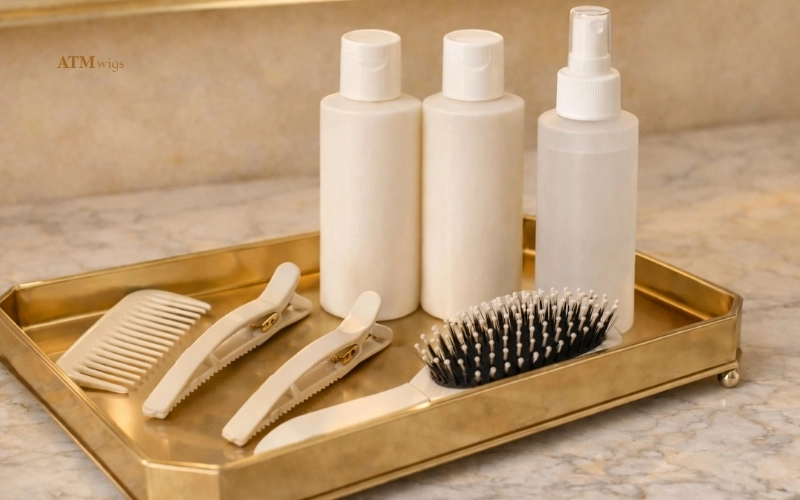
A wide-tooth comb is ideal for most synthetic wig detangling, especially for waves and curls. A wig brush can work for straight textures, but use gentle strokes and avoid brushing aggressively at the roots. Sectioning clips help you detangle in layers, which prevents forcing through knots.
A microfiber towel reduces friction when blotting after washing, and a wig stand supports airflow for proper air-drying while helping the cap keep its shape.
Product checklist (synthetic-safe)
Use a synthetic wig shampoo to cleanse without roughing up fibers. Consider a synthetic-safe conditioner or detangling treatment, applied mostly mid-length to ends. A lightweight detangling spray or anti-static spray can reduce friction when used sparingly, and a very light silicone-based mist can improve slip—but only in small amounts to avoid buildup.
What to avoid (and why)
Avoid heavy oils and thick creams because they coat fibers and attract dirt. Avoid harsh scrubbing, twisting, or rubbing with a towel because friction increases frizz. Also avoid strong household hacks that leave residue; if it makes the wig feel coated, it will usually tangle faster.
How to detangle a synthetic wig without damaging it
Detangling is where many synthetic wigs get ruined—not because detangling is bad, but because technique is wrong. The safest approach is low tension, small sections, and patience.
The correct brushing technique (step-by-step)
Use a brush to hold or display wig (put it on a stand or hold an area of the cap). Start at the ends and comb small sections with short strokes, then move up gradually once the ends are clear. Always support the hair above the area you’re combing so you’re not pulling directly on the cap.
If you hit a snag, stop and work it out gently instead of forcing through. For lace front pieces, keep combing away from the hairline as much as possible.
How to handle nape tangles and matting
Nape tangles happen because of constant friction from collars, scarves, and chair backs. Prevention is the real fix: detangle after every wear, and consider protective styling in high-friction situations (loose braid, low ponytail, half-up style). If tangling is already severe, lightly mist with detangling spray, separate with fingers first, and then comb from the very ends upward in tiny sections.
Texture-specific tips
For straight synthetic wigs, use gentle brushing and avoid over-applying sprays, which can make fibers look stringy. For wavy and curly pieces, finger-detangle first and use a wide-tooth comb only where needed, since brushing can break the curl pattern and create frizz.

How to wash a synthetic wig (the safest method)
When cleaning faux hair, soaking rather than scrubbing is more effective. Although you want to wash away oil, sweat and styling products, it is equally important to minimize any friction you may create during this cleaning process. This method will work with all synthetic wigs including lace front wigs provided you are careful when cleaning the area around the hairline.
How often should you wash it?
A common range is every 8–12 wears, but it depends on your environment and product use. Wash sooner if the wig feels sticky, tangles unusually fast, looks dull, or holds odor. If you wear the wig rarely, wash less frequently and focus on careful storage and light refreshes.
Pre-wash prep
Detangle before you wash. Washing a tangled wig makes knots tighter and increases breakage. If your wig has curls or waves, keep the hair moving in the same direction throughout the process to protect the pattern.
Washing steps (soak method)
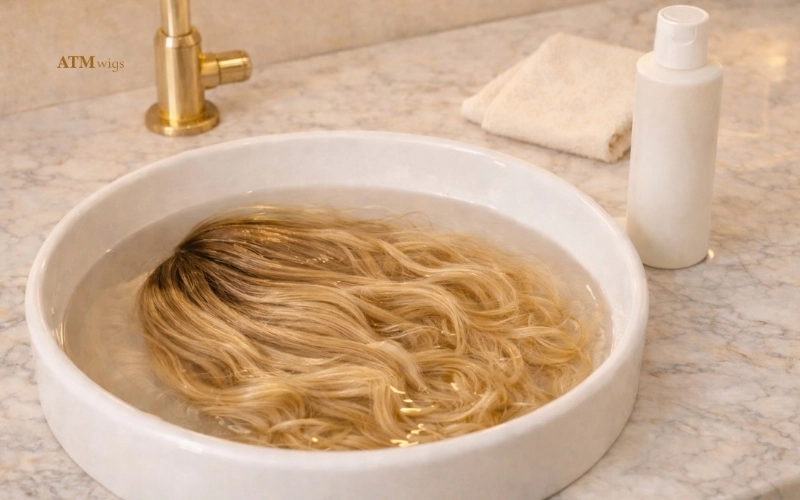
To wash your synthetic wig, fill a basin with water or lukewarm water, add wig shampoo to the water (a small amount) and swirl it around to blend, then submerge the wig in the water, allowing it to soak without twisting, rubbing, or scrubbing the wig. After a few minutes, you will rinse the wig in cool water, using only the water coming from the tap in the direction of the hair, to reduce the likelihood of the hair tangling.
Conditioning (only if synthetic-safe)
If you use conditioner, choose one formulated for synthetic fiber. Apply mid-length to ends, focusing on areas that tangle most, and avoid coating the cap or roots where residue can build quickly. Rinse lightly according to the product directions, since over-conditioning can leave a film that attracts dust.
Drying correctly
Blot with a microfiber towel—do not rub. Place the wig on a stand and allow it to air dry in a ventilated area, away from direct sunlight or heat sources. Avoid high-heat blow drying on regular synthetic fiber, because heat can permanently alter the strand structure.
Styling rules for synthetic wigs (so you don’t melt the fiber)
Synthetic wigs often look best with minimal styling, but it’s important to follow the rules for your fiber type. When in doubt, choose heat-free styling to preserve the wig’s original finish.
Can you use heat tools?
Only use heat tools on heat-friendly synthetic, and stay within the brand’s recommended temperature range. Use the lowest effective heat and keep contact brief, because repeated heat can flatten texture or create long-term frizz. For regular synthetic wigs, skip hot tools entirely.
Heat-free styling options that work
For volume, use velcro rollers on dry hair and allow time to set on a wig stand. For waves or curls, foam rollers or flexi rods can reshape without damage. To smooth surface flyaways, use a tiny amount of synthetic-safe smoothing spray on your hands and lightly pat the outer layer—keep it minimal to avoid buildup.
Fixing “too shiny” synthetic hair
Some synthetic wigs look shinier when new. Shine often reduces naturally after a few wears and a wash, so don’t panic. If it still appears overly glossy, focus on styling and lightweight finishing rather than coating the wig in heavy products, which can lead to dullness and faster tangling.

Storage and travel care (the underrated secret to less tangling)
Storage is where many wigs get tangled without being worn. The goal is to protect the style, reduce friction, and keep the cap in shape.
Daily storage at home
After detangling, store the wig on a wig stand away from heat and sunlight. If you don’t have room, a satin bag is a good alternative because it reduces friction compared to cotton or plastic. Avoid tossing the wig into a drawer, as crushing increases tangling and frizz.
Long-term storage (weeks to months)
Wash and fully dry before storing long-term to prevent odor and material issues. Detangle, secure the style loosely, and store in a box or satin bag in a cool, dry place away from dust. Lace fronts should be kept smooth and not sharply folded at the hairline.
Travel tips
Pack the wig in a satin bag inside a structured case so it won’t be crushed. Bring a small wide-tooth comb and a lightweight detangling spray for quick refreshes. In humid climates, expect more friction tangles and detangle a little more often.

How to make a synthetic wig last longer
A synthetic wig’s lifespan depends on fiber quality, length, texture, and how often it’s worn. Your habits matter most at friction points, especially the nape and ends. With consistent maintenance, many synthetic wigs stay looking good for months, while daily wear will naturally show signs of fiber wear sooner.
Longevity factors that matter
Longer synthetic wigs often show wear faster because the ends rub more and tangle more easily. Dry climates increase static, while humidity can increase friction and matting. Product buildup is also a major lifespan killer because it makes fibers sticky and tangles form quickly.
Prevention checklist (practical and effective)
Detangle gently after every wear, especially at the nape. Use detangling spray or anti-static spray sparingly, and avoid layering heavy products. Rotate wigs if you wear them daily, and reset buildup with a careful wash before tangling becomes extreme.
Repair vs replace
Minor frizz at the ends can often be managed with better prevention and small trims. If the fiber is roughened throughout and matting returns immediately, replacement may be more realistic than repeated rescue attempts. Good care extends lifespan, but synthetic fiber still has a natural wear limit.

FAQs about How to take care of a synthetic wig?
How often should I wash a synthetic wig?
Most individuals will typically clean their synthetic wigs every 8 to 12 uses; depending on daily use or if the wig is being styled with lots of products, they may need to be cleaned sooner.
Can I use regular shampoo on a synthetic wig?
It’s not recommended. Use synthetic wig shampoo to avoid residue and reduce friction tangles.
What’s the best way to detangle a synthetic wig?
Start at the ends, work upward in sections, and use a wide-tooth comb with a light detangling spray if needed.
Why does my synthetic wig tangle at the nape?
Friction from collars and chair backs causes nape tangles. Daily gentle detangling and protective styling help a lot.
Can I use heat on a synthetic wig?
Only on heat-friendly synthetic and only within the recommended temperature range. Regular synthetic should not be heat-styled.
How do I reduce static in a synthetic wig?
Use an anti-static spray lightly, avoid rubbing with cotton towels, and store the wig in a satin bag.
How do I fix a frizzy synthetic wig?
Frizz usually comes from friction wear. Use gentler detangling, reduce brushing, and focus on prevention at the ends and nape.
Can I sleep in a synthetic wig?
Not ideal, since friction causes tangling. If you must, use a satin bonnet or scarf and detangle carefully afterward.
How should I store a synthetic wig?
Detangle first, then store on a wig stand or in a satin bag to reduce friction and preserve shape.
How long does a synthetic wig last?
It varies by quality and wear. Occasional wear can last months, while daily wear shows friction wear sooner.
With the right routine, you’ll know exactly how to take care of a synthetic wig so it stays smooth, less tangled, and easier to wear. If you’d like more care guidance or want to explore quality wig options, check out ATM Wigs’ services or request the latest catalog.

