


Can you use hairspray on a synthetic wig without ruining the fibers? Yes-but the “type” of spray and the “way” you use it matter a lot. Our guide outlines what to use, what not to use, and how to maintain the soft, glossy appearance of your synthetic wig without causing tangles.
Quick answer: yes, but only if it’s wig-safe
You can use hairspray on a synthetic wig, as long as it’s formulated for synthetic fibers or clearly labeled wig-safe.
The safest rule: avoid heavy, super-sticky, high-alcohol sprays made for natural human hair. Those are the ones most likely to leave residue, make the hair feel stiff, and increase tangling.
When hairspray is OK
- You’re using a synthetic wig holding spray or wig-safe hairspray
- You need light hold for flyaways, bangs, or an updo
- You apply it as a fine mist from a distance, not a “wet coat”
When hairspray is NOT a good idea
- It’s a maximum hold or “freeze” formula that dries hard
- It contains a lot of alcohol (often listed near the top)
- You plan to spray daily without washing, because buildup adds up fast
10-second decision checklist
If you’re unsure, ask yourself:
- Does it say for synthetic wigs/synthetic hair?
- Is it flexible hold and brushable, not stiff?
- Does it spray as a fine mist instead of a wet stream?
If you can’t answer “yes” to most of these, skip it.
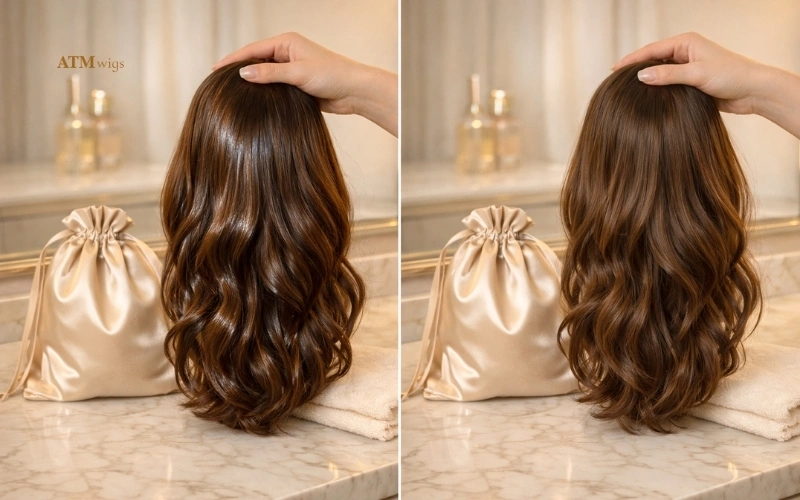
Why regular hairspray can mess up synthetic wigs
Synthetic fiber isn’t the same as human hair. Human hair has a cuticle structure that tolerates certain styling products better, while synthetic fibers tend to hold product on the surface.
That surface buildup changes how the strands slide against each other. More friction usually means more tangles-especially around the nape where scarves, collars, and seatbelts rub.
The 3 most common problems
- 1) Stiffness and “crunch”: Some sprays dry like a shell on synthetic fibers. The wig can feel rough even if it looks fine at first.
- Sticky residue and tangling: Residue grabs onto dust and lint, then the strands start catching each other. That’s when you get mats and knots that feel “impossible.”
- Dullness and weird texture: Buildup can reduce shine in a bad way-making hair look cloudy instead of healthy and natural.
What about heat-friendly synthetic wigs?
Heat-friendly fiber can handle controlled heat better than standard synthetic, but it still doesn’t love heavy product buildup.
If you use hairspray on heat-friendly synthetic wigs, keep it lightweight and clean the wig more regularly. Product + friction is still the main enemy.

What to look for in hairspray that’s safe for synthetic wigs
If you want to hold without damage, choose products designed around synthetic wig care.
You’re aiming for a light, flexible film that reduces flyaways without turning into a sticky layer.
Best formula traits
- Wig-safe / synthetic-friendly labeling
- Flexible hold (not “cement” hold)
- Fine mist application
- Low-alcohol or alcohol-free when possible
- Optional: anti-static benefits to reduce frizz and flyaways
Ingredients and claims to be cautious with
- High levels of ethanol or isopropyl alcohol
- “Extreme hold,” “freeze,” “mega firm” formulas
- Heavy oils that attract dust and can collapse the style
Pick the right spray for your goal
- Flexible hold spray: best everyday option for light control
- Finishing spray: good for flyaways and polished looks
- Anti-static/silicone mist: ideal for friction zones (like the nape)
- Texture sprays: use sparingly; grit can mean faster buildup
How to use hairspray on a synthetic wig without ruining it
The biggest mistake is spraying too close or too much. A synthetic wig should never feel “wet” from hairspray.
Think of hairspray as the final step to lock a style, not the tool that creates the style.
Prep first (it matters more than spray)
Before you spray:
- Detangle gently with a wide-tooth comb, starting at the ends
- Make sure the wig is fully dry
- Style the wig first, then “set” it lightly
If you spray onto tangles, you can basically “seal” the knots in place.
Step-by-step: the safe spraying method
- Put the wig on a stand (or wear it if you need accurate shape).
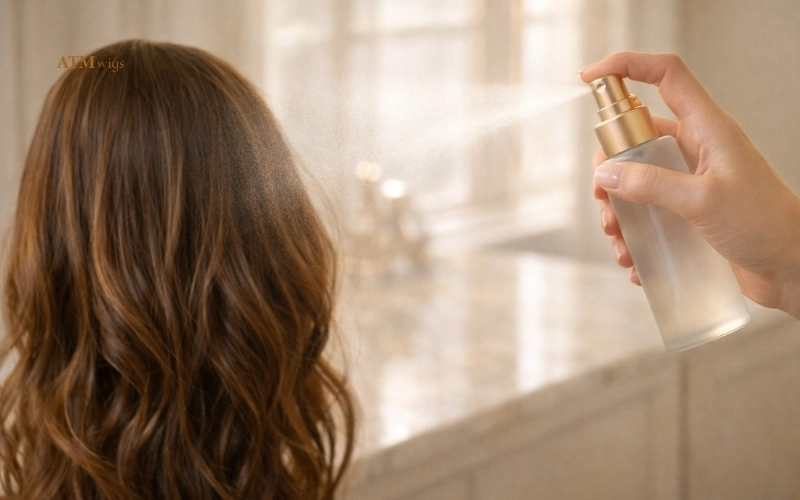
- Hold the spray 8–12 inches (20–30 cm) away.
- Mist in short bursts, then let it dry for 30–60 seconds.
- Repeat only if needed-thin layers beat one heavy coat.
- Smooth with fingers or a comb. Avoid aggressive brushing.
If you want more control, spray a little onto your hands or a brush first, then lightly smooth the surface.
Technique by style type
- Straight styles: Use the smallest amount possible, only where flyaways appear. Over-spraying can make straight synthetic hair look stiff.
- Curls and waves: Mist underneath the curls, then gently scrunch. Don’t rake through the curl pattern after spraying.
- Updos and bangs: Use targeted application. A light mist on your fingertips or a brush gives hold without drowning the fibers.
Mistakes that cause instant buildup
- Spraying too close
- Spraying until the hair feels damp
- Layering product daily without washing
- Spraying the lace/roots area heavily (especially on lace fronts)
Better alternatives when you want to hold with less residue
Sometimes hairspray isn’t the best tool for synthetic fiber, especially if you’re styling frequently.
If your goal is “neat and controlled,” these alternatives can be gentler and cleaner.
For flyaways and frizz
Try an anti-static wig spray or a light silicone mist designed for synthetic hair. It helps reduce friction and keeps the surface smoother.
For curls that hold longer
If your wig is curl-friendly, focus on the set technique first, then use minimal product to lock it in.
A wig-safe styling foam or setting product made for synthetic hair can work well when used sparingly.
For a piecey, styled finish
A tiny amount of wig-safe cream or wax on fingertips can shape face-framing pieces. Keep it light and avoid coating large sections.
How to remove hairspray buildup from a synthetic wig
If your wig starts feeling stiff or sticky or tangling more than usual, it’s time for a reset wash.
The goal is to dissolve residue without rough handling that creates more tangles.
Signs you need a wash now
- Hair feels tacky or crunchy
- Dull, dusty-looking finish
- Tangles increase suddenly (especially at the nape)
- Strands “catch” when you finger-comb
Basic removal (best first option)
- Fill a basin with cool to lukewarm water.
- Add a small amount of synthetic wig shampoo.
- Soak the wig and gently swish-no scrubbing or twisting.
- Rinse in the direction of the fibers.
- Apply a light synthetic conditioner (mid-lengths to ends), then rinse.
- Pat with a microfiber towel and air dry on a stand.
Avoid hot water unless the wig’s care instructions clearly allow it, and never wring the wig out.
If the buildup is stubborn
If the residue is heavy, repeat a gentle wash rather than using harsh cleaners. Strong degreasers can leave fibers feeling rough and more prone to tangling.
After washing, use a detangling or anti-static spray on the ends once the wig is mostly dry.

How often to wash if you use hairspray
There isn’t one universal number because styling habits vary.
A practical rule: if you use hairspray regularly, wash the wig sooner than you normally would, because product residue accelerates friction.
Factors that change wash timing
- Humidity (makes residue feel stickier)
- Daily wear with coats/scarves
- Frequent updos or heavy styling
- Travel and exposure to dust
If you notice tangling is increasing, don’t wait-buildup tends to snowball.
Special cautions: lace fronts, adhesives, and older wigs
Synthetic lace front wigs can absolutely be styled, but you want to avoid saturating delicate areas.
Lace front tips
- Don’t spray directly onto the lace or hairline
- Keep product away from adhesive/tape zones
- Use targeted application for baby hairs or edges (spray on hands first)
Older synthetic wigs
Older fibers may snag faster. Stick to minimal product, focus on anti-static care, and handle the nape gently.

FAQs about Can you use hairspray on a synthetic wig?
Can you use regular hairspray on a synthetic wig?
Although you can do this, we advise against it because regular hairspray can often leave behind residue/scum on synthetic fibers that creates stiffness, leading to tangling. Spray designed specifically for wigs would then be preferred.
What’s the best hairspray for synthetic wigs?
Look for a wig-safe or synthetic-friendly spray with a flexible hold and a fine mist. Low-alcohol formulas are usually gentler on synthetic fibers.
Will hairspray ruin a synthetic wig permanently?
Not always. If you used too much, a proper wash can usually remove the buildup. The bigger risk is repeated heavy spraying without cleaning, which can make tangling and matting much worse over time.
Can you use hairspray on a heat-friendly synthetic wig?
Yes, but keep it light and choose wig-safe formulas. Heat-friendly doesn’t mean product-proof-buildup still increases friction.
How do you remove hairspray from a synthetic wig?
Soak and wash with synthetic wig shampoo using gentle swishing, then rinse in the direction of the fibers. Avoid scrubbing, twisting, or using hot water unless allowed.
Can hairspray reduce shine on a synthetic wig?
It may reduce shine from a synthetic wig, however, it is not the cleanest way to do this. Too much spray can make the hair look dull or dusty. A better approach is to use lightweight finishing products made for synthetic wigs.
Can you use hairspray on a synthetic lace front wig?
Yes, but do not apply hairspray directly onto the lace, knots or areas where you use an adhesive product. Use an outrageous spray on just the flyaways and edge of the wig.
Why does my wig tangle more after hairspray?
Because residue increases friction and makes strands catch onto each other-especially at the nape where rubbing is constant.
Can you use hairspray on a synthetic wig? Yes-just choose a wig-safe formula, apply it lightly, and wash out buildup before it turns into tangles. If you want product recommendations and care solutions that keep styles looking natural, explore ATM Wigs’ catalog and services for synthetic-friendly essentials and pro-level wig care.

