


Hand tied wig: A wig structure where the hair has been hand knotted into the cap to give natural movement, a softer feel and a more realistic scalp look. This guide explains “what is a hand tied wig?”, how it is manufactured and why this is vital for comfort and naturalness.
What does “hand tied wig” mean?
A hand tied wig is when the strands of hair or small clusters of hair are tied by hand into the wig cap. Instead of being sewn into machine-made rows, the hair is attached to the cap base using small knots.
The most important point to understand is that “hand tied” is a construction method, not a hair type. It explains how the hair is bonded to the cap, not if the wig is produced with real hair, synthetic hair or heat compatible fiber.
This is a common misunderstanding. A hand tied wig is not automatically a human hair wig, and a human hair wig is not always hand tied. The real difference is in the cap construction and how the hair is placed into it.
The hair is carefully knotted into the hat by professional wigmakers who regulate the placement, direction and density of the hair. They immediately affect the wig’s realism, its movement and how comfortable it is to wear.
Why hand tied construction matters
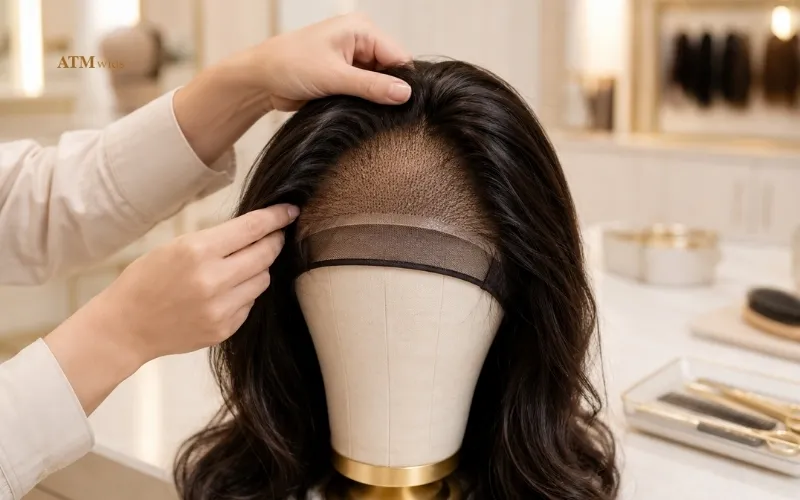
The hand knotted structure is crucial because it affects the mobility of the wig, the look of the root area and the feel of the cap against the scalp.
In a machine-made wig, the hair is sewn into rows of wefts. The technique can add volume and shape but the hair tends to fall in a more set pattern.
The hair is more individually placed in hand knotted wigs. This enables the strands to descend and flow freer from the base of the cap, giving a softer and more natural image.
If the hair is separated into little sections then the hair will look more like actual hair. As the wearer shakes their head, runs fingers through hair or styles it softly, the wig loses its stiffness and looks more natural.
Hand tied construction can also support a more realistic root area. When the hair is carefully tied into lace or monofilament materials, the root area can appear as if the hair is growing from the scalp.
Comfort is another key reason hand tied wigs are valued.The portions that are hand knotted do not employ any bulky machine wefts, so the cap feels softer and flatter against the scalp, especially for everyday wearers or those with sensitive scalps.
A well-made hand tied wig can help take out bulk at the roots. This gives the entire shape a lighter, softer and more natural appearance, especially for wearers who like realistic density rather than hefty volume.

How hand tied construction works inside the cap
Hand tied construction means that the hair is sewn directly to the cap base using little knots. The knots are precisely placed to manage the hair’s direction, density and mobility.
Because of this, the root area might appear flatter and more natural than on a standard wefted cap. The strands may fall more loosely from the root, rather as being set in dense sewed rows of hair.
A well-made hand tied wig should not feel bulky at the roots. The hair should move naturally from different angles and create a softer shape around the head.

100% hand tied wigs vs partially hand tied wigs
Not all hand tied wigs are 100% hand tied. This is a vital detail to know when selecting a wig.
A 100% hand tied wig means the hair is hand tied all around the cap. This often gives the softest feel and most natural movement for the entire head.
Partially hand tied wig: A wig that is hand tied in some places, such as the top, crown, parting area, front section or hairline. The residual cap might be made with machine wefts or another means.
The key point is that “hand tied” does not always mean “fully hand tied.” Buyers should check the cap description carefully to understand exactly which areas of the wig are hand tied.

How to tell if a wig is truly hand tied
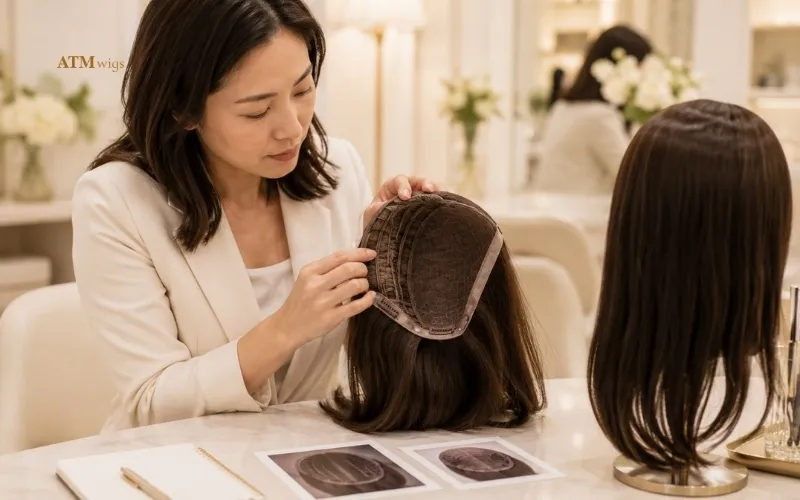
To check whether a wig is truly hand tied, look at the inside of the cap. In hand tied areas, the hair should appear tied into the base with small knots instead of sewn into visible machine-wefted rows.
It is also important to check whether the wig is 100% hand tied or only partially hand tied. Some wigs are hand tied simply at the top, crown, parting or front hair line.
For professional purchasers it is best to ask for explicit cap construction details, inside cap images or product specifications prior to ordering.
What’s the difference between hand tied, lace front and monofilament?
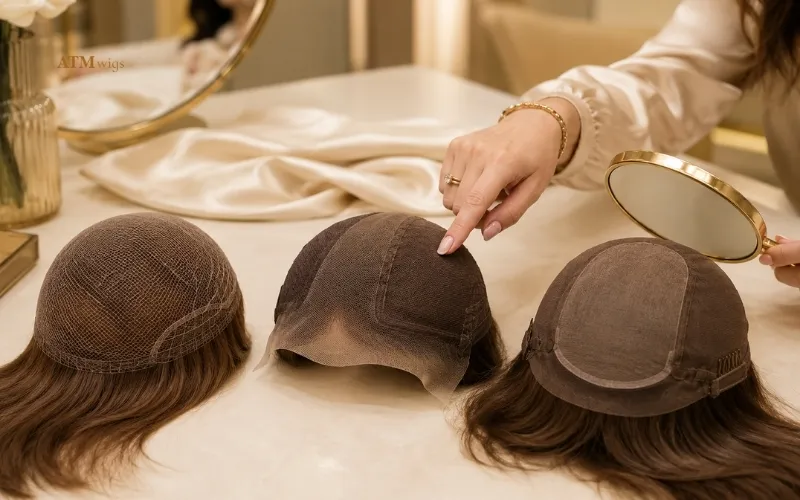
Wig fabrication has three parts: hand tied, monofilament and lace front.
- Lace front wig is the front hair line area. Lace is around the forehead to give a more realistic hair line.
- Monofilament: A fine, sheer material put on the cap, usually on the top or parting, to give the appearance of a natural scalp.
- Hand tied refers to the method used to attach the hair to the cap. Hair can be hand tied into lace, monofilament, or other soft cap materials.
In simple terms: lace front relates to the hairline, monofilament relates to the cap material, and hand tied relates to how the hair is tied into the cap.
Who should choose a hand tied wig?
A hand tied wig is ideal for someone who is looking for a wig that seems natural, moves naturally and is comfortable enough to wear on a regular basis.
It’s particularly useful for those who wear wigs every day, those with sensitive scalps and those experiencing thinning hair or hair loss. The soft cap feel and realistic scalp effect can make the wig easier to wear for longer periods.
For many everyday wearers, soft movement and realistic density are more important than excessive volume.

How to choose a good hand tied wig
When choosing a hand tied wig, look beyond the phrase “hand tied.” Check whether the cap is fully hand tied or partially hand tied, and review which materials are used in the lace, monofilament, or soft cap areas.
Hair type also matters. Human hair offers the most natural texture and styling flexibility, while synthetic fiber may require less daily styling.
The cap size, density and color design should also meet the user’s need. Good hand tied wig should be tight fitting and natural looking at the roots and gentle moving without being bulky.

FAQs about hand tied wigs
What is a hand tied wig?
A hand tied wig is a wig that is hand tied into the cap using individual strands of hair or tiny groupings of hairs. This structure enables more natural movement, a softer cap feel, and a more realistic scalp look.
What is the difference between a hand tied wig and a human hair wig?
No. “Hand tied” refers to how it is made and “human hair” refers to the fiber. A wig can be constructed of synthetic hair, heat compatible fiber or human hair and hand knotted.
Does hand tied always mean fully hand tied?
No. Some wigs are 100% hand tied, while others are only partially hand tied. Buyers should check the cap description to understand which areas are hand tied.
Do hand tied wigs look more natural?
Yes. Hand tied wigs tend to look more natural as the hair is able to move more freely and the root area can look more genuine especially when used in conjunction with lace or monofilament materials .
Are hand tied wigs more comfortable than machine made wigs?
Many hand tied wigs are more comfortable as the hat is usually softer, flatter and less bulky than a traditional wefted cap. This may be good for daily wear or for those with sensitive scalps.
Can a hand tied wig have a lace front?
Yes. A hand tied wig can also have a lace front. Many quality wigs have a hand tied construction and a lace front to provide natural movement and a natural front hairline.
Who is a hand tied wig best suited for?
If you desire smooth movement, natural density and a comfortable cap for everyday wear a hand tied wig is the ideal choice. It is especially suitable for daily wig wearers, people with sensitive scalps, and buyers looking for a premium natural-looking wig.
Understanding what is a hand tied wig helps buyers see why cap construction matters for comfort, movement, and natural realism. Explore ATM Wigs’ catalog or services to find premium human hair wig options for professional-quality results.

