


Learning how to clean a toupee helps remove oil, sweat, adhesive and styling buildup without damaging the hair or base. This guide takes you thru the entire cleaning process from removing old tape and glue to safely washing, conditioning and drying the system.
What you need to clean a toupee
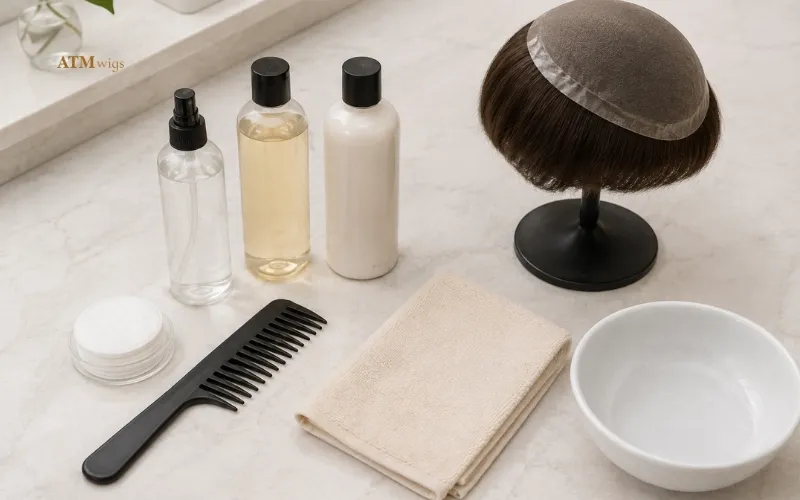
Having the right products ready before you start makes the cleaning process easier and reduces unnecessary handling of the hair system.
You may need:
- A wide-tooth comb or hair system brush
- Mild sulfate-free shampoo
- Lightweight conditioner
- Adhesive remover suitable for the base
- Cotton pads or a soft lint-free cloth
- A clean basin or sink
- Microfiber towel
- Hair system or wig stand
- Lightweight leave-in conditioner, if needed
Shampoo and conditioner
A human hair toupee should generally be cleaned with a mild shampoo rather than a strong clarifying formula.
Processed human hair no longer receives natural oils along the hair shaft in the same way growing hair does. Strong cleansing products can therefore make the hair feel dry, rough or difficult to manage.
Choose a gentle sulfate-free shampoo and a lightweight conditioner. Conditioner is best concentrated on the mid-lengths and ends rather than heavily applied to knots or attachment surfaces.
Adhesive remover and cleaning tools
If the toupee is attached with tape or liquid adhesive, choose an adhesive remover that is compatible with the specific base material.
Lace, polyurethane and monofilament do not always react the same way to cleaning solvents. Avoid assuming that one remover is appropriate for every toupee.
Sharp tools, stiff brushes and aggressive scraping should also be avoided because they can damage delicate base materials.
How to clean a toupee step by step
A complete toupee cleaning involves more than shampooing the hair. The underside of the base must also be cleaned so old tape, glue, oil and product residue do not interfere with the next attachment.
Step 1: Remove the toupee safely
Gently loosening the adhesive between the toupee and scalp begins.
Put a proper adhesive remover on the attachment area and let the glue weaken according to the product instructions.
Start lifting the system from one side, don’t pull it up from the center.
Support the base with your fingers and work slowly. This is especially important with lace and ultra-thin skin bases, as they may stretch or tear if too much force is applied.
Step 2: Remove tape from the base
If the toupee uses tape, wait until the adhesive has softened before removal.
Slowly pull one corner of the tape back, with the base underneath supported.
If it still won’t budge, add more remover and let it sit a bit longer. Pulling too hard can stretch thin polyurethane or damage lace.
Never pull sticky tape thru lace holes or over tangled hair.
Step 3: Clean adhesive residue from the base
After the tape is removed, the adhesive may remain on the underside of the base.
Put a little bit of compatible adhesive remover directly on the residue. Let it soften and then roll or wipe away gently with your fingers, a cotton pad or a soft lint free cloth.
Repeat the process if necessary rather than scraping stubborn glue.
Once the adhesive is removed, clean away any remaining oily solvent residue. The base should be free of old glue and remover before fresh adhesive is applied later.
Step 4: Detangle the hair before washing
Detangle the toupee before fully wetting the hair.
Start at the ends and gradually work upward using your fingers, a wide-tooth comb or a suitable hair system brush.
Support the hair close to the base while detangling so you are not pulling directly against the knots.
Do not force the comb through a difficult tangle. Separate the strands slowly to reduce unnecessary shedding.
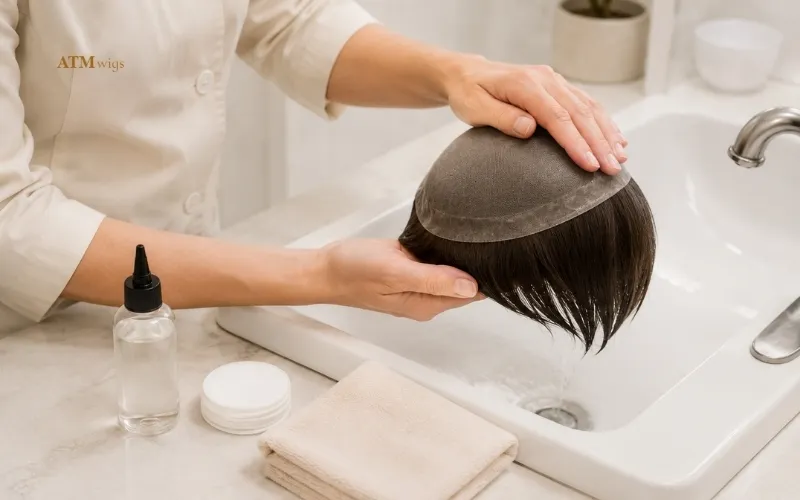
Step 5: Rinse the toupee
Use cool or lukewarm water to wet the hair.
Allow the water to flow in the natural direction of the strands rather than swirling or twisting the toupee in the basin.
Avoid very hot water. Processing hair and delicate base materials can be stressed by high temperatures, which are not necessary for cleaning.
Step 6: Shampoo the hair and base
Using a small amount of mild shampoo spread thru the hair in your hands.
Don’t rub your strands together in circular motions; instead, smooth the shampoo down thru the strands. This helps to reduce the tangling and friction.
When cleaning the base, use gentle pressure. Do not scrub lace, monofilament or knotted sections as you would natural scalp hair.
Pay attention to areas where scalp oil, sweat or styling products have accumulated.
If the system is unusually dirty, a second gentle wash may be useful. However, double shampooing is not necessary for every cleaning session.
Should you soak a toupee?
A short soak may help loosen dirt in some systems, but a long soak is generally not necessary.
Long submersion times, especially with stronger cleaning products, can put unnecessary stress on delicate lace, thin polyurethane and areas where knots are present.
For regular toupee cleaning, you usually have more control with controlled rinsing and gentle shampooing.
Step 7: Rinse out the shampoo thoroughly
Rinse the toupee with cool or lukewarm water until all the shampoo is gone.
Let the water run the same way as the hair.
Do not wring or twist the system to remove water.
Rinsing is important as any shampoo residue can make human hair feel coated, dull or difficult to style.
Step 8: Condition the hair
Apply a light conditioner to the middle lengths and tips.
Rub it thru the hair with your fingers, without rubbing the strands together.
Do not apply heavy coating to the base or knots unless the conditioner is specifically for use in those areas.
Conditioning helps to restore softness and manageability after shampooing, which is especially important for human hair toupees.
Step 9: Rinse the conditioner
Make sure to rinse the conditioner out well with cool or lukewarm water.
Hair should feel smooth, but not heavily coated.
The area of the attachment and especially the base are important. Residual excess conditioner can interfere with cleanliness and may impact future bonding on these surfaces.
Step 10: Dry the toupee correctly
Rinse and lightly squeeze out excess water with your hands.
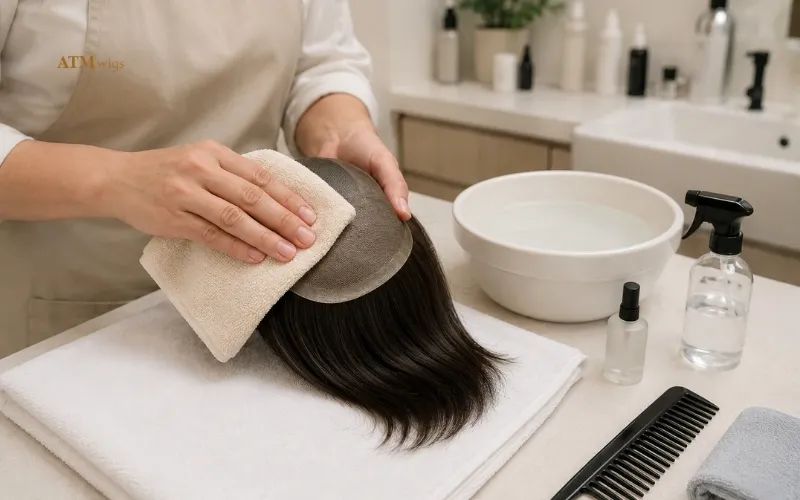
Place the toupee on a microfiber towel and blot the hair. Do not rub the strands between the towel or twist the system.
Place the toupee on a suitable stand and allow it to air dry as often as possible.
If you need to use a hair dryer, use low to medium heat and keep the airflow moving Avoid hot air blowing on lace, polyurethane or bonded areas.
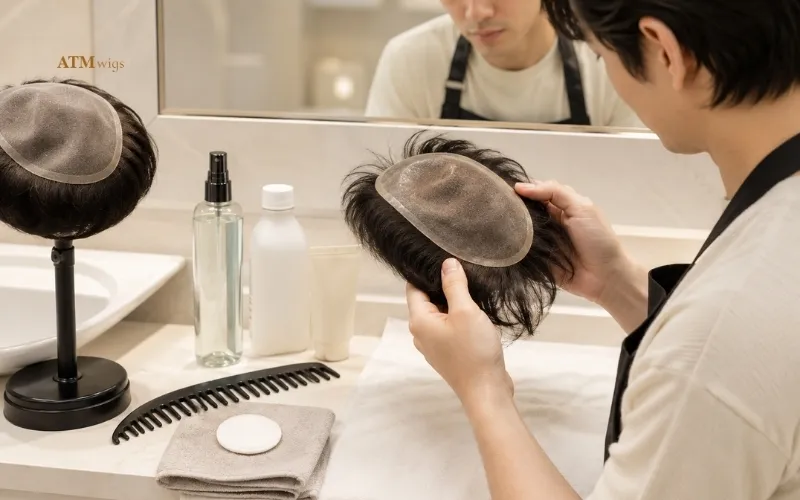
Step 11: Detangle after drying
Once the hair is mostly or completely dry, detangle again gently.
Start at the tips, work your way up to the root.
If your hair feels dry, a bit of lightweight leave-in conditioner can help soften and make it more manageable.
Refrain from applying heavy oils directly on the attachment surface.
Step 12: Prepare the toupee for reattachment
Before you apply new tape or glue make sure the bottom of the base is perfectly clean and dry.
The surface to which it will be attached must be free of water, oil, conditioner, solvent or old adhesive.
Residue can weaken the bond and make the next attachment less secure.
Apply fresh tape or liquid adhesive only after the base is ready, following the instructions for the attachment product you use.
How to clean different toupee bases
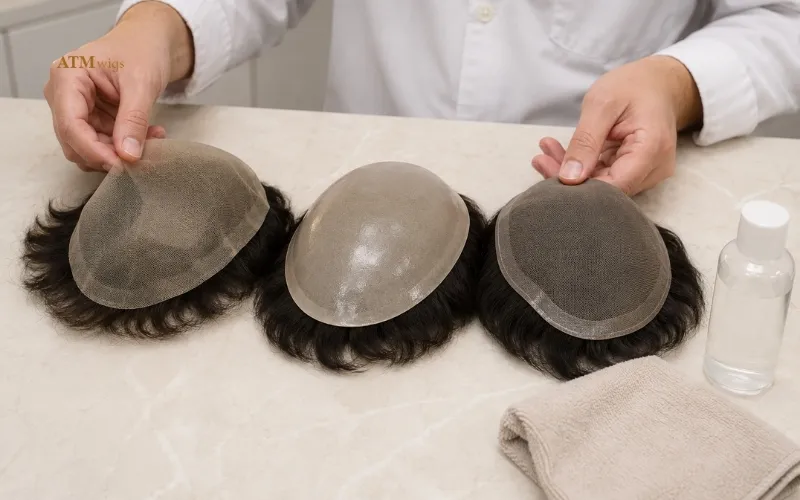
The hair-washing process is similar across many toupees, but cleaning the base itself requires different precautions depending on its construction.
How to clean a lace toupee
Lace bases require particularly gentle handling because the mesh and individual knots can be delicate.
Allow adhesive remover enough time to soften glue before removing it. Avoid scraping the lace or pulling sticky tape through the mesh.
When shampooing, use light pressure around the base and avoid rubbing directly over the knots.
Rinse in the natural direction of the hair and support the lace whenever you handle the wet system.
How to clean a poly or skin toupee
Polyurethane bases provide a smooth attachment surface, which can make tape and adhesive easier to remove.
However, ultra-thin skin can still stretch or tear if handled aggressively.
Use an adhesive remover suitable for polyurethane and allow stubborn glue to soften before wiping it away.
Avoid sharp scraping tools, excessive stretching, very hot water and concentrated dryer heat.
How to clean a monofilament toupee
Monofilament bases are often more structured than very fine lace, but they may still contain individually tied hairs.
Support the base while removing adhesive and washing the system.
Clean around the mesh and knots with gentle pressure rather than vigorous scrubbing.
Rinse carefully so shampoo, conditioner and cleaning residue do not remain trapped around the base.
How often should you clean a toupee?
Every toupee is different, and there is no one cleaning schedule that will work for all of them.
For many regular wearers, washing around once a week can be a practical starting point. However, frequency depends on scalp oil, sweating, styling products, attachment method and how often the system is worn.
Clean the toupee when buildup is present rather than shampooing unnecessarily.
Frequent washing can increase handling and may make human hair feel dry over time, so the goal is to keep the system clean without over-cleansing it.
Toupee cleaning mistakes to avoid
Scrubbing the base
Aggressive scrubbing can stretch lace, loosen knots or damage thin polyurethane.
Use gentle pressure and allow appropriate cleaning products to loosen residue.
Pulling off adhesive
Never force old tape or glue from the base.
Soften the adhesive first, then remove it gradually to reduce stress on the material.
Using very hot water
Hot water is not required to clean a toupee effectively.
Cool or lukewarm water is generally more suitable for processed human hair and delicate bases.
Using too much shampoo
Using more shampoo does not necessarily clean the system better.
A small amount distributed evenly through the hair is usually sufficient and easier to rinse out completely.
Applying conditioner to the knots
Heavy conditioner around knotted areas may contribute to hair slippage in some systems.
Concentrate conditioner mainly on the mid-lengths and ends.
Rubbing with a towel
Rubbing wet hair with a towel can lead to unnecessary friction and tangling.
Instead, blot with a microfiber towel gently.
Drying with excessive heat
High heat can dry human hair and place stress on delicate base materials.
Air drying or controlled low-to-moderate heat is generally safer.
FAQs about how to clean a toupee
Can you wash a toupee with regular shampoo?
A mild regular shampoo may be suitable, but a gentle sulfate-free formula is usually preferable to a strong clarifying shampoo. Human hair toupees can become dry more easily than growing hair.
Can you soak a toupee in water?
Brief soaking may be suitable for some systems, but prolonged soaking is usually unnecessary. Gentle rinsing and controlled shampooing … are usually better for minimizing stress on the base.
How do you remove glue from a toupee?
Apply an adhesive remover that is compatible with the base, allow the glue to soften and gently roll or wipe it away. Avoid scraping or pulling stubborn residue.
Can you clean a toupee while wearing it?
You can gently wash the hair of many bonded toupees while they are attached. However, cleaning the underside of the base and removing old adhesive normally requires taking the toupee off.
How long does a toupee take to dry?
Drying time varies depending on hair length, density, base construction and airflow. Rather than following a fixed number of hours, make sure both the hair and attachment surface are completely dry before reattachment.
Learning how to clean a toupee correctly helps remove adhesive, oil and product buildup while protecting the hair and base. ATM Wigs carries a range of human hair toupees. Check out our catalog and services to find a system that fits your attachment and cleaning preferences.

